

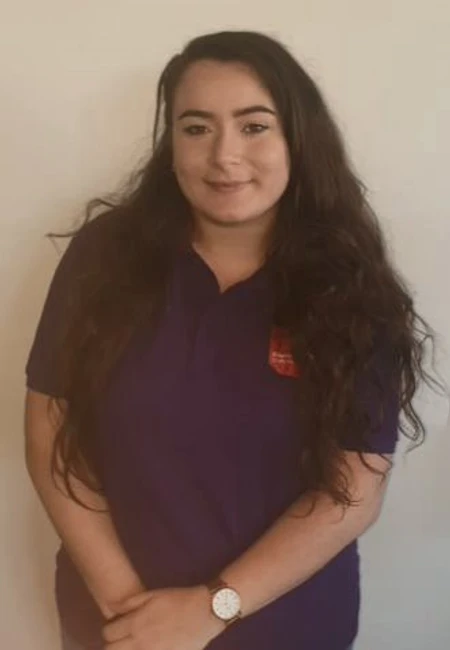
Careers Graduate Q&A Becky from LSE!

Written by Becky

We interviewed Becky, a final year student from the school of LSE, to see what steps she is taking to secure her future job position. Questions asked included: have her career plans changed, what are her concerns about her future and how she is being pro-active during this uncertain time.

1) What are YOUR concerns about YOUR future?

My main concern for the future is that I feel uncertain about the path I am going to take now. Everyone has a plan on what they intend to do when they graduate, but now everything is postponed and recruitment drives are temporarily halted, it concerns me that it will take longer to get to where I want to be. I am also concerned that I may not perform as well in all of my deadlines as I would if things had not been disrupted. This means that in order to still achieve everything I want to I need to be more pro-active, organise my time to ensure I can manage my work-load and use my time productively.

2) Have YOU changed YOUR plans?

My initial plan was to apply for graduate jobs throughout January – May and start applying for a masters. This is because I was torn on what route to take, therefore I could potentially find a graduate job I was suited to/was fortunate enough to get or could take a masters degree to become more qualified and competent in my field. I had started applying for graduate jobs, however since this pandemic has occurred, the recruitment for these roles have all been put on hold. Therefore, I am still applying for the new postings I find, but the prospect of completing a masters is appearing as a more realistic and positive option for me. Therefore, the changes to plans I have made are that I will be less set on applying for jobs and more focused on completing my work and considering a masters.

3) What are YOU pro-actively doing now?

In order to use my time productively I have been completing free online courses to add more skills to my CV and equip me with more knowledge for whatever path I take. A lot of companies are providing massive discounts on their courses to help people during this pandemic, for example one course I am taking is for a software used in forensics which is usually £495. Currently this is now free and therefore taking advantage of these offers to build my skills. I have also used this time to add content to my LinkedIn profile and network with prospective employers and employees in the field.

4)What are YOUR top tips for YOUR fellow graduates?

My tips would be…

  • make a career plan covering a number of options which you can take in this uncertain time.

  • Take advantage of free online courses to boost your skillset

  • Take up additional work opportunities to gain more experience

  • Use networking sites such as LinkedIn to communicate with employers and companies and see what type of things they are doing during the pandemic

“Most importantly, try not to lose hope! I know it may seem like nothing is going well but things will get better.”
 

To speak to one of our Career Coaches get in touch.

Email: careers@staffs.ac.uk

Twitter: @CareersAtStaffs

Instagram: @CareersAtStaffs

Facebook: Staffordshire University​ Career & Personal Development

LinkedIn: @CareersAtStaffs

LSE Careers Relationship Manager Update

Check out how our Career Managers can help you!

Introducing Gary McNally, Careers Relationship Manager for LSE!

To speak to one of our Career Coaches get in touch.

Email: careers@staffs.ac.uk

Twitter: @CareersAtStaffs

Instagram: @CareersAtStaffs

Facebook: Staffordshire University​ Career & Personal Development

LinkedIn: @CareersAtStaffs

CAE Careers Relationship Manager Update

Check out how our Career Managers can help you!

Introducing Samantha Levitt, Careers Relationship Manager for CAE!

To speak to one of our Career Coaches get in touch.

Email: careers@staffs.ac.uk

Twitter: @CareersAtStaffs

Instagram: @CareersAtStaffs

Facebook: Staffordshire University​ Career & Personal Development

LinkedIn: @CareersAtStaffs

HSE Careers Relationship Manager Update

Check out how our Career Managers can help you!

Introducing Sally Thompson, Careers Relationship Manager for HSE!

To speak to one of our Career Coaches get in touch.

Email: careers@staffs.ac.uk

Twitter: @CareersAtStaffs

Instagram: @CareersAtStaffs

Facebook: Staffordshire University​ Career & Personal Development

LinkedIn: @CareersAtStaffs

SBS Careers Relationship Manager Update

Check out how our Career Managers can help you!

Introducing Claire Bashford, Careers Relationship Manager for SBS!

To speak to one of our Career Coaches get in touch.

Email: careers@staffs.ac.uk

Twitter: @CareersAtStaffs

Instagram: @CareersAtStaffs

Facebook: Staffordshire University​ Career & Personal Development

LinkedIn: @CareersAtStaffs

LPF Careers Relationship Manager Update

Check out how our Career Managers can help you!

Introducing Vicky Cook, Careers Relationship Manager for LPF!

To speak to one of our Career Coaches get in touch.

Email: careers@staffs.ac.uk

Twitter: @CareersAtStaffs

Instagram: @CareersAtStaffs

Facebook: Staffordshire University​ Career & Personal Development

LinkedIn: @CareersAtStaffs

CDT Careers Relationship Manager Update

Check out how our Career Managers can help you!

Introducing Sally Smith, Careers Relationship Manager for CDT!

To speak to one of our Career Coaches get in touch.

Email: careers@staffs.ac.uk

Twitter: @CareersAtStaffs

Instagram: @CareersAtStaffs

Facebook: Staffordshire University​ Career & Personal Development

LinkedIn: @CareersAtStaffs

How Believing In Yourself Can Secure You A Job!

Written by Megan


Recently a blog was released on how important selling yourself on your CV and throughout the recruitment process really is, and over the past few days, I myself have experienced the reality of this whilst applying for a summer internship. Therefore, today this blog will be focusing on my own personal experience which will hopefully inspire those of you who don’t quite have the confidence to apply for that role you want and give you a push in the right direction.

In case you know nothing about me, I’m Meg, and I am a Career Coach at the Staffordshire University Career Studio. More so, I am a Level 4 Forensic Investigation student, after changing courses from Psychology in September 2019. During my time as a Psychology student, I had the long-term goal of undertaking a year in industry placement between levels 5 and 6 to gain the experience required for after graduation. If you don’t know why this is important, go and read our blog to give you a wider understanding. Trust me, you won’t regret it! However, since moving to a new degree meant re-doing level 4, my funding no longer allowed me to take a year out to complete my placement, and so I found myself in a predicament. The main question I was asking myself was ‘I’m stuck. This is a disaster; how do I fix it?’ with this cat being an accurate representation of my feelings at the time:

So I started to research my options, keeping in mind how important gaining experience was for me. Throughout my role, I hear about students wanting to undertake summer placements if they are unable to undertake year-long placements for whatever reason, however I never thought I would find an opportunity relevant to my degree that I would be interested in. Perseverance was key though, and FINALLY! I came across a role with the Criminal Justice system from June – September in my area. This to me seemed like the perfect opportunity, the perfect solution to my problem until I read the requirements for applying and all the hopes and dreams I’d managed to think of in the minute that had passed since finding the job came crashing down again. The requirements stated that you MUST (scary, shouty capitals in place) be in your penultimate/final year of your degree or you would not be eligible, and this for me was a giant red cross because I was no longer a level 5 student.

After sitting and staring at the entry requirements for 20 minutes, contemplating my life choices, I realized that out of the 5 or 6 requirements listed, that was the only one I did not meet. In my opinion, I was more than qualified in every other area apart from the fact that I am a level 4 instead of a level 5 student. This gave me a bit of a confidence boost and I decided I would apply for the role whether I was eligible or not because realistically, the worst thing they could say was…no. And given that I could then re-apply next year if I was not successful this time round, them saying no didn’t sound all too awful. So there and then, I filled in the application form as I would any job I wanted (to the best of my ability, which I didn’t believe was very well at the time) and pressed send. This was quite a nerve-racking move for me, with my self-confidence not being at its highest in regards to my professional abilities when applying for jobs, and despite my co-workers best efforts to support me and build my confidence, I was nowhere near convinced I was going to secure this job. Still, a brave face was put on and, on my application, you’d think I believed I was the Beyonce of the Criminal Justice world, using that inspiration from the ‘Selling yourself’ blog to try and put my skills out there.

After a long wait time, to my surprise… I was offered a face-to-face interview. Then, due to Covid-19, this was changed to a Skype interview which in my opinion, was even scarier than the original because it was something I’d never done before. After even more Covid-19 developments, I received an email stating that all interviews had been cancelled, and that the selection process would be based solely on the application submitted. In my mind, that was it, I was doomed, and the position would never be mine for the taking. Then, even more to my surprise, I did it! I secured the position and am now currently awaiting a start date for my new summer job.

In my opinion, the moral of this blog is if I can do this, then so can you. I’m no different to any other student, my skills are sometimes rocky, I get nervous and don’t believe in myself because I’m not qualified yet. BUT (and it’s a very big, important but) all you have to do is sell yourself and hope for the best. The braver you are, the more you think you can do it, the more you can achieve. I think it’s definitely safe to say that all you have to do to secure the role you want is…

To speak to one of our Career Coaches get in touch.

Email: careers@staffs.ac.uk

Twitter: @CareersAtStaffs

Instagram: @CareersAtStaffs

Facebook: Staffordshire University​ Career & Personal Development

LinkedIn: @CareersAtStaffs

How to Sell Yourself

The importance and impact of selling your ability, skills, knowledge and work experience!

Written by Megan

When applying for a job, it is important to stand out from the crowd, especially when it comes to a popular company that everyone wants to work for. To do this, having a CV is a good place to start. However, having a CV alone, with no acknowledgement to any skills you may have acquired throughout your studies and work experience will not be enough to secure that job. Therefore, it is of upmost importance to make all your abilities, knowledge, skills, everything you have been working towards – stand out like a sore thumb. This is called selling yourself, and its quite possibly the most valuable skill you will ever learn to have when it comes to employability.


To do this, a strong skills section is needed. First list those skills you know that you have. Most people almost definitely have communication skills – we all know how to hold a conversation – and time management skills at the very least. Then it’s time to think outside the box. That time your football team won the league? Evidence of teamwork. When technology failed you right before a deadline, but you managed to pull it back and ace your assignment anyway? Evidence of problem solving. You will always have more skills than you expect yourself to have, you just need to look at your experiences from a different angle to see they exist. And why stop there? Evidence anything you may have learned so far in your degree – show the employers you have what they’re looking for and you’re exactly the person they want to employ. This can be done by listing relevant modules you may have undertaken that can be applied to a role being advertised.

So, you’ve now sent your CV off and been offered some interviews. Fantastic!! Now is the time to really lay it on thick. When at interview stage, this is your opportunity to show those employers what you are really made of, let them know that yes, you can meet their customer service standards, or yes, you can complete the administration tasks that will be set for you, and you can also do it in a quick and concise manner. Employers wish to know who you are, and what you are capable of, so don’t be shy in telling them. After all, selling yourself well can be the difference between landing the role you want, or letting it slip away to someone else.

However, all this is easier said than done. To help improve on this, think about people’s first impressions, constantly update your CV, LinkedIn and so on, to ensure that your skills and knowledge is always at its best. If you feel you don’t have enough skills to sell, undertake online learning on LinkedIn, and attempt to practice presentation skills away from people, then maybe in front of family or friends. There are also many videos available on how to sell yourself on Youtube which can be of great help.

There is no time like the present to understand the importance of selling yourself – there are blogs available across the Staffs Uni blog site that can help with developing skills, CV’s, etc., so take the initiative now.

To speak to one of our Career Coaches get in touch.

Email: careers@staffs.ac.uk

Twitter: @CareersAtStaffs

Instagram: @CareersAtStaffs

Facebook: Staffordshire University​ Career & Personal Development

LinkedIn: @CareersAtStaffs

Your CV is a Symphony

Written by David


What’s in a song? Bunch of different instruments making noises and maybe someone saying some stuff over the top of it, right? I’m probably making some music students or musicians highly agitated right now, but please, bear with me.


CV’s …analogously, well, they’re kind the same (honest!) Think about it, you’ve got layers of content, instead of a strings, wind, percussion you’ve got a Profile and Interests and Achievements; we’ll call that bass – a CV isn’t complete without it but, lets be honest, most the time it’s barely thought out – keep strumming those root notes bro!


You’ve got Education and Work Experience that’s definitely the vocals and guitar, the melody that everyone hums along to (and then belts out the chorus before drunkenly going back to that humming verse section). It all ends with “References available upon request” (we’ll call that drums, its just kinda there, feels wrong without it, but no one thinks it’s all that important).


But you can’t just have a bunch of sections glued together and call it a song. It’s got to gel – it’s got to flow and it’s got to feel like a natural narrative that provides the reader with a comfortable experience. Most people don’t want to listen to songs that are just random instruments – like a bunch of beginner jazz musicians – you get it right through practice and then unleash it on people. A CV is the same. You get the basic message right, content – get those examples of skills, then you work out where they belong – Work, Education, Interests maybe even a Key Skills section. Wahey, getting there now! You pick the order of your sections – the form of the song, and you fine tune the wording so it flows, intro into verse, into chorus. There is form here now, there is structure. But it isn’t a finished song yet.


Let’s talk about post-production. Let’s talk about templates, stylistics and formatting. Let’s say, the tired cliché, less is more! What is a CV meant to do? It’s delivering a specific message to a specific reader: I am suitable for the job you are advertising. No, let’s go one further: I am the person you want for the job you must fill.


The content is what achieves this, but through style and formatting you can draw the readers eye to the right places, you can make the song feel natural, they’ll know when that chorus is coming because you’ve produced it right, they’ll know where to look for that hook because you’re a master at this, because, unlike music, writing a CV is easy. It just takes a bit of practice and confidence.


Our post-production comes in many forms – fonts, font-sizes, bold, underlined and italic, text boxes (and styling, colours etc). Just remember – Less is more. Use them for your subheadings, you want them to know this is the verse, this is the chorus. Use it for key elements – but don’t highlight bits that aren’t critical, and don’t accent it every time you drop the name of the key skill you saw on the job specification.


Minimise it and bring it in slowly, review it each time you make changes – ask yourself: Is it looking better? Is it helping me deliver my message? Is it still easy to read?

Does it sing?


Did you find this blog post useful? Give it a like if you did!


To speak to one of our Career Coaches get in touch.

Email: careers@staffs.ac.uk

Twitter: @CareersAtStaffs

Instagram: @CareersAtStaffs

Facebook: Staffordshire University​ Career & Personal Development

LinkedIn: @CareersAtStaffs