

Resilience While Job Hunting

Written By Bertha Eke

Just as in life patience is a virtue, in the competitive employment market resilience is indeed a virtue. The ability to keep on keeping on, push harder, try again, pick oneself up after being rejected severally is much needed now more than ever before by recent graduates and jobhunters. It is so easy to give up and be indolent but what is even more beautiful and admirable is being able move past a disappointing situation and try harder.

In the generation we live in right now where everyone wants things to be done right away, everyone wants quick results and have no time to be patient, it can be quite frustrating and discouraging to be turned down during a job application or not be called back after an interview. In these times, it is quintessential for jobhunters to develop the virtue of resilience because it builds character and if well nurtured could build great confidence and an indomitable desire to persevere against all odds until success is achieved

People often view jobhunting solely as a means to an end. For them all that the jobhunting exercise entails is simply to search for a job, submit their CV’s, attend an interview and get the job. Obviously an individual only goes on a job-hunt primarily to get a job but there are so many other skills and experiences that can be built and developed during a job-hunt. By fully embracing the jobhunting process and all that comes with it, an individual can develop invaluable skills that will propel them to unfathomable heights. Success in a job-hunt, and in life generally, comes from our ability to pick ourselves up, and move quickly past disappointments. This is where resilience and perseverance come in.

Resilience is defined as ‘the ability to adapt successfully in the face of stress and adversity’, while perseverance is ‘persistence in doing something despite difficulty or delay in achieving success’. Developing these closely linked essential skills will enhance a jobhunter’s self-confidence and create opportunities for them as they become more self-assured in taking risks.

With perseverance, a jobhunter does not give up on finding the right position for them during difficult periods. The reason this skill goes hand in hand with resilience is because, in the face of rejection, the jobhunter can bounce back and see the prospect for personal development while pushing forward to attain their goal.

By developing the ability to face setbacks, unforeseen events, obstacles and failures without allowing them to dominate, derail or destroy one’s life, there is absolutely nothing that will be impossible for one to achieve. As a matter of fact, a lot of recruiters has cited resilience as a major skill they lookout for in a potential employee.

Resilience is not about being unaffected by stress or pressure; it is about how an individual manages stress and difficulties after hard and disappointing times in their life by recognising when you are affected by it and having coping strategies to deal with it. A jobhunter can adapt and learn how to become more resilient. Resilience could be built quicker or slower depending on a person’s jobhunting experience. Everyone’s experiences are different and the way a jobhunter react to highs and lows in their job-search will be different. It is important to understand that not all jobhunting experiences are going to be difficult, a person may find their perfect job within a matter of days or weeks while another may search for months or even years before landing their dream job. It is paramount to prepare oneself mentally, physically and financially for what is to come because things may not always go as planned.

When learning how to be more resilient, a person can look back on some of their harder times and think about how they made it through despite feeling so overwhelmed at that moment. They can then use their past experiences to make this time better because they will then realise that if they made it through those difficult times in the past despite feeling like it would be impossible to do so then this time would be no different. This realisation will make an individual cognisant of the fact that they will always come out the other end a stronger person, with the better career they had hoped for. They will grow and learn to feed off of the negatives and turn it into motivation. Not everyone is always good at this straight away. Rejection is not always easy, and some may dwell on it. So, resilience whilst looking for a job is a great skill to have.

When an individual is rejected by a job they really wanted, or any job, it is important that they ask for feedback. Getting feedback from an interview or a job application allows a person to move forward with the ability to take criticism and make the changes to help them further in the future. They will take the advice, use it and move on to their next opportunity. This is what resilience is all about, taking a negative situation, accepting the outcome and moving on. It definitely comes with practice, but over-time and throughout a person’s job search and their career, resilience will help them.

Resilience is all about getting up and trying again and so is a successful job search. Keep being the ambitious individual you are, and you will get there. Remember that you are doing this for yourself. Jobhunting can be a difficult task and building resilience can sometimes be even harder. It is a good trait to have but make sure you are not pushing yourself too hard. Take care of both your physical and mental health and you are more likely to achieve what you want.

To speak to one of our Career Coaches get in touch: 

Email: careers@staffs.ac.uk 

Twitter: @CareersAtStaffs 

Instagram: @CareersAtStaffs 

Facebook: Staffordshire University​ Career & Personal Development 

LinkedIn: @CareersAtStaffs

Career Chat: https://www.staffs.ac.uk/students/careers/careers-studio/chat-to-our-careers-coaches

Staying Motivated During The Search For Career Opportunities

Written by Megan

Searching for jobs can be a difficult task, regardless of whether this is for part-time work, placement opportunities or graduate opportunities. Sometimes the task of this can come across as time consuming with all the different applications to fill in, disappointing if you don’t land the role you were hoping for, and overall, just very demotivating.

So, what can we do to combat this feeling?

Here at the Career Studio, we recommend keeping your end goal in mind! After all, the amount of hard work that you put in is to reach what made you want to pursue this career in the first place. To do this, there are a few points to keep in mind whilst on your journey:

Set yourself an in-between goal: This can be as big or as small as you like. The aim is to give yourself something to work towards when your end goal seems too far away or not possible just yet. If you do set yourself a big goal, think of little steps that you can take to work towards this. This can be something as small as creating a draft CV, outlining a list of companies you may potentially want to work for, or making an appointment with the Career Studio to discuss what options you may have.

Keep track of steps you have completed, and those that are still on your to-do list: By doing this, you can be super organized and it will make seeing how much you have accomplished that much easier, and if you can do those, you can easily do the others. After completing these tasks, reward yourself! This will help with a sense of achievement, which will further motivate you to do more.

Listen to podcasts, read articles and follow other news related to your industry: This will help keep you passionate about your future career, and can also provide good conversational topics for you to discuss whilst networking on LinkedIn and Twitter, or when you reach interview stage.

Think about what you will need for the application process: Things such as a CV, cover letter, a professional LinkedIn and Twitter account play a huge role in looking and applying for jobs, so make sure these are all up to date and to a great standard. Unsure of how to do this? The Career Studio is here for you to provide advice and help you feel more confident – email us at careers@staffs.ac.uk

Alternatively, you can go to MyCareer to book your appointment: https://www.staffs.ac.uk/students/careers/mycareer

The road may seem long but keeping these points in mind will get you there in the end if you just keep going!

HEALTHY HABITS FOR JOB SEEKERS

Written by Jane

Do you need Healthy Habits when looking for a job?

ABSOLUTELY!!

Image result for healthy habits for students and Careers

The Career Studio recommends that students STOP biting their nails and adopt new FABULOUS Career seeking habits:

Time – Set aside 30 minutes each week and start thinking about your career goals, achievements, and aspirations.  Where do you want to be in 6-12 months, 2 years or even 5 years? Create a journal – writing ideas down often make your thoughts a reality

Industry News – Start looking on Twitter for companies within your desired industry and FOLLOW them – liking the jobs they advertise, the projects they’re working on, there discoveries and the competitions they’re winning – Do a ‘Like’ a day!

Look at job adverts for future possibilities (Placement/Graduate/Part time/Summer Internships) Feel prepared and recognise your academic strengths and your key skills, if you identify a skills gap do some research to find a FREE course! – Do it Weekly!

Give yourself quiet time to reflect on what you’ve read or researched – What are your career possibilities and ask yourself how they can be achieved…. BE REALISTIC.

When you achieve smalls steps, smile and give yourself praise!

Be organised and start thinking about your application materials, your CV, your LinkedIn account, covering letters etc… – The Career Studio can give you the confidence to move forward. Consider the career events you could attend?

Be Prepared – successful candidates introduce good habits and start to address different skills – you could consider the following:

Be dependable          Willingness to ask questions

Always do your Best  Be Kind            Image result for healthy habits for students and Careers

Smile and have a positive attitude      Be organised.

Learn to take criticism well and use it to your advantage.

  Don’t be afraid to say I don’t know. 

Its OK to think about your next steps!

Got a query? Approach the Career Studio, our peer to peer coach approach is for you to find out more information and feel confident – email us at careers@staffs.ac.uk

Click on MyCareer to book your appointment: https://www.staffs.ac.uk/students/careers/mycareer


Looking For Opportunities 2021

Written by Amber

Looking for opportunities, whether that be placements, part-time work or graduate positions, and feeling like you are walking into the unknown? Well, here are the facts you need to know before getting started.


What we know

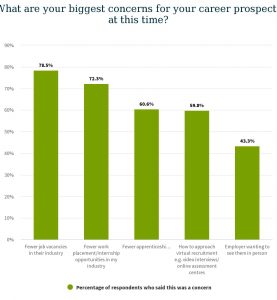
Research conducted by Prospects (2020) suggests that the student job market is being significantly influenced by the global pandemic. This is already having an impact on individuals with nearly two thirds of respondents feeling negatively about their career prospects. Unfortunately, this is understandable with the findings reflecting the losses of jobs, placements and internships for students.

So, what are the main concerns?

As you can imagine, the most common concern reported was there being less job vacancies in a chosen or relevant industry, with less placement/internship opportunities being the next significant concern.

However, it isn’t all bad. 18% of respondents stated they felt positive about their career prospects with the pandemic giving them more time to make plans and fully research their options.


What we can do

Whether you feel positively or negatively about your career prospects we can help. For those feeling positive about having some extra time to make plans, why not make an appointment to see a career coach to talk about those career plans or options and come up with an action plan.

Alternatively, if you are feeling negatively about your career prospects, let us help you change your mind or at least feel a bit more positive about it. It all starts with discussing what your goals are and then we can look at your options. For those of you who are actively seeking employment make sure you check My Career. Then once you have found an opportunity, we can help you by checking your CV, going over application forms or processes, and helping you prepare for interview. Whatever the outcome we are still here for you.    


What’s on offer

Current graduate opportunities we are advertising include:


Remember, we’re here for you every step of the way! Contact us for further support or book an appointment via My Career. Check back next week when we highlight the placement opportunities that are currently available.


To speak to one of our Career Coaches get in touch:

Email: careers@staffs.ac.uk

Twitter: @CareersAtStaffs

Instagram: @CareersAtStaffs

Facebook: Staffordshire University​ Career & Personal Development

LinkedIn: @CareersAtStaffs

Career Chat: https://www.staffs.ac.uk/students/careers/careers-studio/chat-to-our-careers-coaches



Lessons Learned From A Semester Of Online Learning: The Social Aspect

Written by Annie Thompson


I have been learning from home throughout the last semester on a PGCE PCET course. This in itself has challenges as the activities and group work set would usually be within the classroom to allow all the trainee teachers to get to know each other, and also to demonstrate how activities and tasks could be implemented into our own teaching work and classrooms within further education to assist us with teaching our own students.

The adaptation to online learning and the lecturer’s versatility has proven to be a success, as we have all explored together different ways of engaging students with online learning apps and resources available to us. I have found that whilst being a trainee teacher everyone is willing to help everyone out, everyone supports each other and wants everyone’s teaching journey as a new teacher to be as successful as possible, working together through the circumstances and challenges faced by Covid-19.

I was lucky to have a small number of people on my course so that every lecture had an opportunity for questions and tutorials every week. I feel as though I have been able to speak to my lecturers and gain crucial assistance on my assignments easier than previous years that were face to face. The social aspect has also been enhanced as we created a group chat that was organized within teams for everyone on the course. This has been an amazing way to get to know people, share resources, ask questions to your peers and discuss areas that you feel you need more help in or where to find resources or documents on blackboard, this has been really helpful and a chance to find out others perspectives and experiences of their own teaching journeys.

Another social aspect that has facilitated communication on the course, is that every week a different person leads the starter to the lecture and that a compilation playlist has been made so that every person had a chance to add their favorite song. Therefore every week a starter is led by one of the students and a song is played in the introduction, this engages everyone straight away and because there is an activity that is followed it increases communication and enhances the social aspect of the lecture from the offset. Every lecture has activities that are carried out in break out rooms with randomized groups generated, to keep everyone mixing and contributing as at the end everyone will feedback with their answers and ideas in the main lecture. This allows continuous transfer of knowledge and sharing of view- points and opinions which lead to discussions that enhance everyone’s understanding of the topic and content of the lectures every week.

The lesson I have learned from a semester of online learning is ask questions – most people on your course want to know the answers to whatever you are going to ask. Book a tutorial, online tutorials are much easier to navigate and more accessible. Also, your peers can help you with any quick questions you need answering or where to find anything, and your contribution to discussions is valuable and will further your understanding of the topic. The social aspect of my course has been about making the most of the interactions we do have online and through using and sharing resources and ideas, as everyone is in the same boat and will help each other wherever they can.

To see how we can help you with this new way of working check out our website or book an appointment via My Career


To speak to one of our Career Coaches get in touch:

Email: careers@staffs.ac.uk

Twitter: @CareersAtStaffs

Instagram: @CareersAtStaffs

Facebook: Staffordshire University​ Career & Personal Development

LinkedIn: @CareersAtStaffs

Career Chat: https://www.staffs.ac.uk/students/careers/careers-studio/chat-to-our-careers-coaches


Lessons Learned From A Semester Studying At Home

Written by Amber

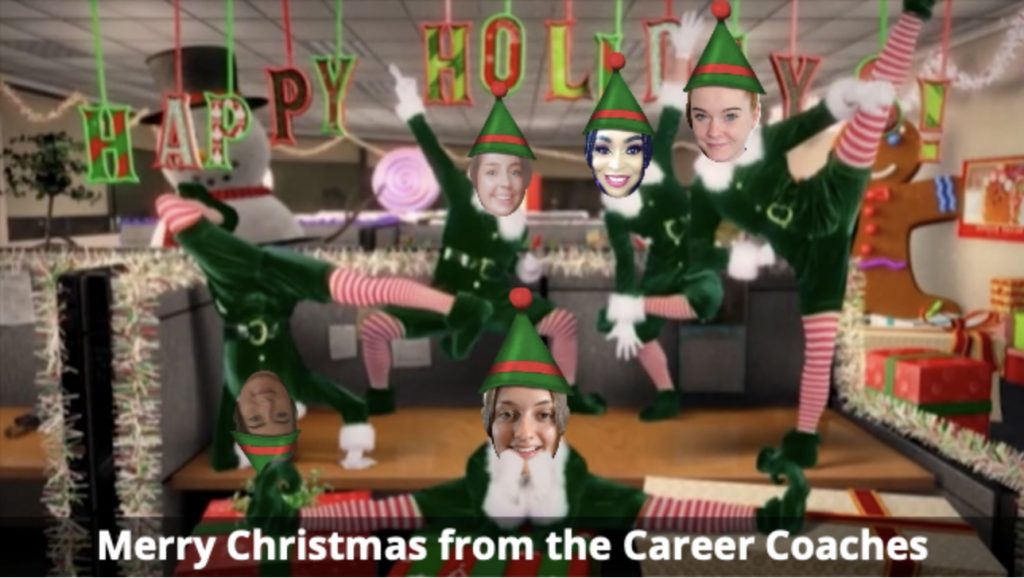
As we start a new year, many of us are reflecting on our time studying at home so far, looking at what we have learnt and how we can continue studying this way. All five of our Career Coaches were asked about lessons learned from their semester studying at home that could be shared with others.


My lesson learnt from a semester studying at home is to avoid all distractions and procrastination. As we are all at home, it becomes very easy to start doing something else, whether that be housework, having a chat with a housemate or family member, or scrolling through social media whilst “listening” to a lecture or trying to get assignments done. However, this will only cause stress further down the line, as you realise you didn’t hear a few sentences that your lecturer said because of that funny cat video, or a deadline has suddenly crept up on you and you feel you don’t have the time to complete your assignment to the best of your ability. I myself am guilty of most of these, and therefore would advise to turn off the TV whilst writing your assignments, take the time to listen and re-listen to any lectures or recordings you’re not sure of and all in all, minimise stress throughout these already stressful times.” – Megan


My lesson learned from studying at home would be, routine is key! For me, I’ve found that structuring my day with lectures or work I have to do has helped me feel more productive and like the days have purpose. It’s important to recognise that there are tasks that need completing, however, I equally recognised I need time to rest, relax and recuperate so that I can function at my best. To achieve this, I try to do something active or ‘for myself’ every day to help me get in the right mindset and help me concentrate. All that being said, I have stuck to having one day off a week as we are under a lot of pressure, more than usual at the moment, and we all need a break every now and then!” – Amber


The lesson I have learned from a semester of online learning is ask questions – most people on your course want to know the answers to whatever you are going to ask. Book a tutorial, online tutorials are much easier to navigate and more accessible. Also, your peers can help you with any quick questions you need answering or where to find anything, and your contribution to discussions is valuable and will further your understanding of the topic. The social aspect of my course has been about making the most of the interactions we do have online and through using and sharing resources and ideas, as everyone is in the same boat and will help each other wherever they can.” – Annie


My lesson learned from studying at home would be: as students, we are all in the same situation and can help each other a lot! At first, the studying from home situation was completely new, unusual and everything just felt uncertain! I was worried the standard of teaching would be compromised, the quality of my assignments would be affected and that it was not worth continuing the year. This academic year I started a master’s degree which meant I was also starting a completely new course with new people, so it was even more daunting not having any classmates to speak to that I knew. However, we quickly made a group chat, and we have all spoke every day since September which led me to discover they all had felt the same as me! We now reassure each other, talk about our worries and encourage one and other to stay motivated, not give up and that whatever we are feeling is normal! My advice would be that you are not alone, there’s a strong likelihood that other students are feeling what you are and now more than ever we need to be communicating, providing and receiving support and voicing our concerns!” – Becky


My lesson learned studying at home was it was not the easiest thing for me. I had to adjust to the whole process of remote learning. By studying at home, I realised that being self-sufficient was not easy and my lecturers do a lot of work in the classroom. I learned that studying at home was not the best experience ever and I commend all long distance/ remote learners who have been doing this before the lockdown.” – Bertha


Whatever lessons you have learned, either the same or different to ours, the most important things to remember is you’ve got this and the career team is still here for you! Get in contact through any of the methods below to get some support from a Career Coach.


To speak to one of our Career Coaches get in touch:

Email: careers@staffs.ac.uk

Twitter: @CareersAtStaffs

Instagram: @CareersAtStaffs

Facebook: Staffordshire University​ Career & Personal Development

LinkedIn: @CareersAtStaffs

Career Chat: https://www.staffs.ac.uk/students/careers/careers-studio/chat-to-our-careers-coaches

Merry Christmas From Careers!

Written by Amber

It’s that time of year again…Christmas! Everyone’s Christmas plans and ideal Christmas celebrations look different every year but I’m sure this year they will look different again. However you are spending your Christmas this year, at home with family or friends, with Christmas dinner or a takeaway, in your Christmas pjs or dressed up like you’re going “out out”, we wanted to pass on our Christmas wishes. 

To see the full video clip of our message follow this link: https://elfyourself.com?mId=55325


From all of the Careers Team we wish you a Merry Christmas and a Happy New Year! We look forward to working with you in 2021!


To speak to one of our Career Coaches get in touch:

Email: careers@staffs.ac.uk

Twitter: @CareersAtStaffs

Instagram: @CareersAtStaffs

Facebook: Staffordshire University​ Career & Personal Development

LinkedIn: @CareersAtStaffs

Career Chat: https://www.staffs.ac.uk/students/careers/careers-studio/chat-to-our-careers-coaches

Driving Home For Christmas…

Written by Megan

Going home for Christmas during these uncertain times can be a daunting experience. There may be worries about seeing family members you haven’t seen in a long time, the effects that Covid-19 may have on usual Christmas traditions, or the risk of spreading the virus to family members and loved ones. This blog outlines some tips and tricks for dealing with these worries and how to make the most of going home for the Christmas period.

 

  1. Make sure you organise travel as soon as possible. Christmas is a busy period for everyone, so if you must travel on public transport, try and choose a day and time in which these won’t be as cramped. Avoiding rush hours and weekends may be the best way forward!
  2. Try to social distance as much as possible on the run up to leaving. This is mainly to minimise the chances of spreading the virus and keeping you and your loved ones safe! And if possible, take a Covid test a few days before just so you can be sure it is safe to travel.
  3. Do as much Christmas shopping online as you can. Again, this ties in with tips 1 and 2. Shops will be extremely busy at this time of year, making it difficult to maintain social distancing too. This makes Christmas shopping stressful even when we’re not in a pandemic. Online shops usually have more choice too, whilst also potentially supporting some smaller businesses who may be in need of the custom at these uncertain times. If you can get these delivered to the place where you will be spending the Christmas period, this can also save having bags of things to take on public transport with you! #LifeHacks.
  4. Make sure your university accommodation is ready for when you return so you don’t have to worry about coming back to it! As much as everyone hates cleaning, coming home to a tidy and clean house will make those post-Christmas blues that little bit easier. Even if it seems sad, put the decorations away and clean up all the glitter and fake snow so it doesn’t need to be done in January when you get home.
  5. Get as much work as possible done before you leave. This will make relaxing and spending time wit family a lot more enjoyable. You will have chance to chill out and watch some Christmas films with loved ones without stressing about that assignment that is due the first week back at uni. Take some time to yourself and do things that you enjoy! Have a well-deserved break.
  6. Finally, don’t forget to have fun! 2020 has been a strange year for all, so try to enjoy Christmas as much as you possibly can. Tweak traditions so they are still possible instead of writing them off completely, make new traditions for future years, and make some good memories for the end of 2020.


Here at the Career Studio, we would like to wish all our students the happiest of holidays and best wishes for the new year! We can’t wait to see you all in 2021.


To speak to one of our Career Coaches get in touch:

Email: careers@staffs.ac.uk

Twitter: @CareersAtStaffs

Instagram: @CareersAtStaffs

Facebook: Staffordshire University​ Career & Personal Development

LinkedIn: @CareersAtStaffs

Career Chat: https://www.staffs.ac.uk/students/careers/careers-studio/chat-to-our-careers-coaches


A Day In The Life Of A SAMPID Placement Student

Written by The SAMPID Team

SAMPID (Staffordshire Advanced Manufacturing, Prototyping and Innovation Demonstrator) is a new project to the University that supports businesses from Staffordshire. You could be involved with helping local companies on a paid placement based in the Mellor Building to develop a new product, service or process. You could take part in this project using brand-new cutting-edge manufacturing equipment and have the opportunity develop your skills, whilst continuing your training and increasing your employability.
 

The SAMPID team have written a description of what a day in the life of a student undertaking a SAMPID placement may look like:

8am and my alarm goes off. My first lecture isn’t until this afternoon, but I’m going to spend some time this morning working on my SAMPID job placement. I work 15 hours a week in my role as a Prototyping and Innovation Consultant, and it’s great because I can choose the hours I work to suit me. It’s based at the University too in the Mellor building, which is so handy for me because it means there’s no travel time between work and lectures, and also no commute in the morning as I live on campus! Maybe I can get away with one more snooze…

9am and I’ve made the short walk from my accommodation to the Mellor Building. I’ve booked some time to work with the University’s new robotic arms, which are so cool! My favourite is the collaborative robot, or cobot, as it has the capability to mimic exactly what I’m doing with my own arm. The company I’m working for on the placement are looking for help with stress-testing their prototypes, so the robots are perfect for this. I’ll be here all morning and then think I might pop to Squeeze Box for some lunch before my lecture.

3pm and my lecture has just finished. Since starting my SAMPID placement I’ve been feeling a lot more confident on my course, as one of my lecturers is also the academic assigned to support me and the company. It’s great getting that extra one on one time with them, and I’ve also been able to relate the things I’ve learnt on my placement back to my course – for me I find that stuff sinks in so much better when I can see how it is actually applied in the real world! My lecturers are really pleased with how my work is coming along and my personal tutor’s asked if I’ve ever considered going on to do a PhD after I finish my Master’s course. I hadn’t until recently as I didn’t know if I’d be good enough, but lately I’ve started to think that maybe it is something I could do!

Some days I’ll head back home after lectures and do a bit more work in my room but today I think I’ll go and type up my SAMPID update report in the Library to send off to the company, as I also need to pick up a book for my course and do some printing too. It’s so convenient being able to get everything done in one go!

I don’t want my 12-week placement to end as I’ve built up a really good relationship with the company I’ve been working with and they say that they’ve been really impressed with me. They’ve also told me to keep in touch as there may be job opportunities with them in the future that they’d consider me for, which would be great.

An email pops up while I’m at the Library from Unitemps, and I notice that there are now two other SAMPID placements being advertised which are due to start soon. I’ve had such a good experience with this one that I think I’m going to apply for another – fingers crossed I’ll be able to make a start on one of the new projects just as my current one is wrapping up!

5pm and I’m just finishing off at the Library as I’m meeting some friends for a drink soon. A couple of them can’t come because they work in bars and restaurants and will just be starting their shifts which is a shame, I’m glad that’s not me! They’re all dead jealous that I’m earning £9.34 an hour too, as most of them get way less than that – guess the first round had better be on me!


All SAMPID placement opportunities will be advertised on My Career https://www.staffs.ac.uk/students/careers/mycareer.

If you require any support with your application for a SAMPID role or other roles please email careers@staffs.ac.uk or chat with our Career Coaches at https://www.staffs.ac.uk/students/careers/careers-studio/chat-to-our-careers-coaches

If you have any questions about the SAMPID project please email Rachel Wood, SAMPID Programme Manager, rachel.wood@staffs.ac.uk.


To speak to one of our Career Coaches get in touch:

Email: careers@staffs.ac.uk

Twitter: @CareersAtStaffs

Instagram: @CareersAtStaffs

Facebook: Staffordshire University​ Career & Personal Development

LinkedIn: @CareersAtStaffs

Career Chat: https://www.staffs.ac.uk/students/careers/careers-studio/chat-to-our-careers-coaches


Avoiding And Managing Burnout

Written by Amber

During the pandemic we are all facing personal and professional challenges we may not have faced before. With working and studying from home, especially now during lockdown 2.0 and for those of us that may be isolating, it can be extremely difficult to stay focused, motivated and on task, to the point where we might actually be starting to experience burnout.  


What is burnout?

“Burnout is a state of emotional, mental, and often physical exhaustion brought on by prolonged or repeated stress” (https://www.psychologytoday.com/gb/basics/burnout).

I don’t know about you but with the extended social isolation, worrying about catching covid-19 and the impact it could have on family members, trying to balance work, study and a socially distanced social life on top of our usual uni experiences, we all could be experiencing repeated and prolonged stress.

There are many factors that are also probably making us feel exhausted like sitting in the same chair all day because work or uni are all or mostly online, we can’t meet people from other households, or we are physically not allowed to go out. Things like not being able to socialise and go outside the house could have huge implications on the motivation, productivity and wellbeing of individuals.


How to avoid or manage burnout?

Some of these tips have helped me but that doesn’t mean they work for everyone. Try to find things that work for you.  


Set Boundaries  

Remember it’s okay to say no! You don’t have to be capable of doing everything all the time – if you don’t have time, don’t feel able or just don’t want to do it then that’s okay.


Healthy Work-Life Balance

Make sure if you work or study at home you are not going beyond what is expected of you. If you work from home, I highly recommend not having work emails on personal devices you have access to all the time like your phone.  


Designated Workspace

Try to have a specific workspace like a desk or different room to where you relax if possible. It can help with your ‘work mindset’ to have a specific place to do work tasks.


Write A List

I am definitely a list person! Sometimes it helps to write down your tasks for the day and when you cross them off it can be so satisfying. Try to make sure they are achievable though otherwise the to-do list could have a negative impact.  


Take A Break

This sounds so simple but having a break and switching off is the best thing for us! I try to have at least one day a week where I do nothing but facetime friends and binge watch Netflix. If you feel like you can’t have a full day off, then at least try to have an hour or two each day.


Fresh Air

For people that aren’t outdoorsy, I still recommend trying to get outside occasionally as I’m sure we all might be experiencing some cabin fever at some point during the pandemic. I know it’s cold at the moment which doesn’t seem inviting but after 8 hours sat in one spot at a computer screen even the cold air is welcoming.   


Talk

One of the biggest, most important things to do is to talk to people, whether this is people you know like friends and family, speaking to lecturers or tutors, or speaking to people you don’t know. If things start becoming overwhelming or you feel like you’re more stressed than usual, then tell someone.


Meeting Deadlines

Now, as many of you may know this is also a busy time to meet deadlines for graduate schemes, jobs and placements, which can also be stressful. To try and make that experience easier for you firstly try to follow (or find) tips to help manage stress and burnout.

Regarding career questions, problems or applications the Careers Team can help you every step of the way. Make an appointment with a Career Coach via My Career (https://www.staffs.ac.uk/students/careers/mycareer) and we can discuss what stage you’re at and how best we can help you. This is a service you can keep coming back to as many times as you need, even when you are a graduate.  

Alternatively, you can also chat to a Coach (https://www.staffs.ac.uk/students/careers/careers-studio/chat-to-our-careers-coaches) if you would prefer a more informal (text-like) conversation. Our Coach profiles also show our experiences which may help you get the answers you need as many of us may have ‘walked in your shoes’.


Remember we are still here for you!


To speak to one of our Career Coaches get in touch:

Email: careers@staffs.ac.uk

Twitter: @CareersAtStaffs

Instagram: @CareersAtStaffs

Facebook: Staffordshire University​ Career & Personal Development

LinkedIn: @CareersAtStaffs

Career Chat: https://www.staffs.ac.uk/students/careers/careers-studio/chat-to-our-careers-coaches